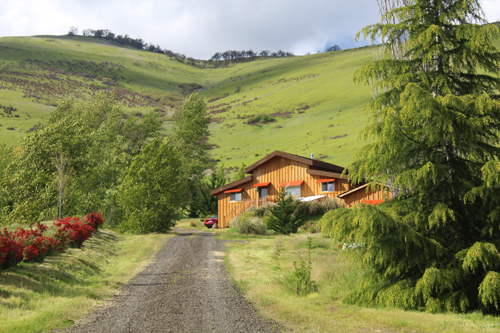
Eric's Bio and Profile, by interview:
Born: 1963 Reno, Nevada
Eric studied piano privately but intermittently from ages 8-18 (1971-81). He loved classical from the beginning. When he watched Bugs Bunny cartoons as a child he was also listening intently to the background music which happened to be Beethoven, Rossini, and other great composers.
His interests revolved around science and music. As a pre-teen (1975) he was the first kid on his block (or any block) to build a reflector telescope from scratch, and play classical music on his electronic keyboard (Switched-on-Bach style).
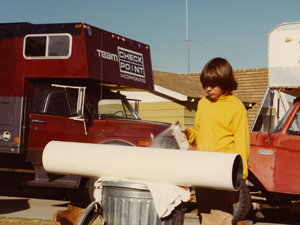 Painting telescope tube
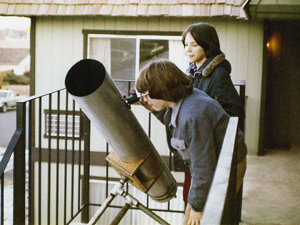 Eric adjusting the finder scope on his Newtonian reflector telescope
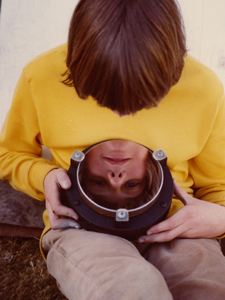
Eric, 12, took a month to grind the 6" telescope mirror, then had it aluminized.
His Dad had a motorcycle shop and Eric rode and raced flat-track and motocross, but his motorcycle never took take precedence over his piano.
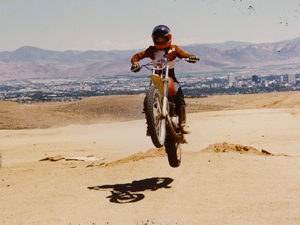 Desert riding
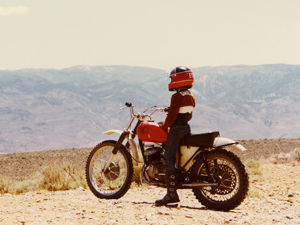 Eric, 9, on CZ 250
 Motocross
 Eric, 9, on Honda XR75
 Eric, 8, at the piano
 One more tune & off to the races
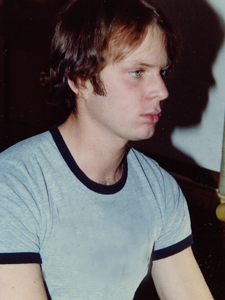 Eric, 17, at the piano
At 17 (1980) he moved from Reno, Nevada to Ashland, Oregon with his mom and sister and found an inspirational piano teacher, Cynthia Whittier, who recognized and nurtured his talent as a pianist and composer. (See testimonial by CW in "Testimonials")
At 20 (1983) he graduated from the San Francisco School of Piano Tuning and served his internship as a tuner/technician in a large piano store in Reno, Nevada.
At 23 (1986) he took three months off to hike the Pacific Crest Trail through Oregon and Washington with his girlfriend at the time, then moved back to Ashland to set up his recording studio, a tuning and teaching business, and also became the resident tuner at Southern Oregon University (then SOSC).
At 26 (1989) he began working out of his studio, replete with a grand piano, top-of-the-line electronic keyboard, a computer for sequencing, and various modules capable of doing complete orchestral scores---so he was ready to do video soundtracks commercially.
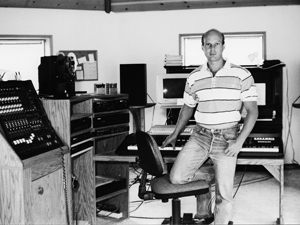 Eric, 27, in his recording studio
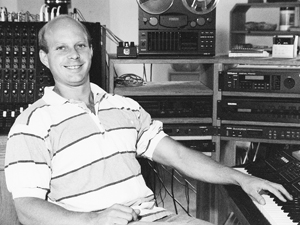 Eric at the electronic keyboard
His first opportunity came when he was commissioned to do an original soundtrack for a white-water rafting video (Gayle Wilson Productions). That was a creative success and he went on to do an original soundtrack for a PBS special about East/West Germany called: The Torn Iron Curtain.
In 1990, Diane & Eric Hyrst, directors of the Oregon State Ballet, commissioned him to write a 20th century ballet called "Millennium"---a smattering of different styles of modern music, inc. jazz. It was all done on his electronic keyboard and was a huge success as a crowd pleaser. By popular demand "Millenimun" was brought back three years in a row, with a standing ovation after each performance.
With his very first composition, he made his debut as a young American composer to keep an eye on.
In 1992, he composed and played the soundtrack for another ballet: "Rhapsody in Red", a whimsical classical piece that was also well received.
In 1994, he wrote and played the "Sonata in C" ballet---a beautiful classical-era ballet---and it was a big hit too.
He has since composed a romantic Rhapsody, several Baroque-era preludes and fugues (one is titled "Pretude"), a short and sweet piece called "Grapenuts", and numerous other works in the old styles, but with Eric's own inimitable style within them.
Eric humbly calls himself just an average guy with an above average passion for science and classical music, as well as a love for animals and nature.
Growing up he had many odd jobs as a handyman in the construction business and recently helped build his own house. (see the "Building Eric's House" series in the menubar) But over the years he worked variously as a piano tuner/technician, piano mover, piano teacher, and piano salesman. He has been a classical pianist for weddings, dinner houses, wineries, country clubs, and house parties. He had his own post-construction cleaning business for a few years, and he's had his own tuning business for 30 years (since age 20).
He said he has always been keenly interested in augmenting an acoustical piano with electronics such as amplification and reverb. As a young teen he stripped down and souped up his pianos at the same time he was restoring and hot-rodding his '57 Chevy.
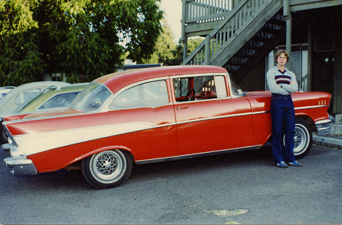 Eric's 57 Chevy
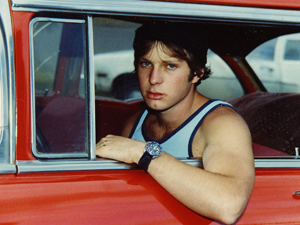 Eric, 18, in 57 Chevy
Eric says that not only is the technology he dreamed of now available, but he has perfected the technique of vastly improving the sound of almost any piano. He decided to share this knowledge and experience with other pianists and music lovers, hence his website: "Pianoamp.com".
 Eric 28
Eric's plans for the future:
- Create an instructional DVD for kids.
- Continue composing on a daily basis.
- Perform more for classical music appreciators.
- Expand the piano amp business to help people with modest muffled-sounding pianos get the best sound they can from their pianos.
- Find a nice gal who has an interest in science and classical music to share it all with.